
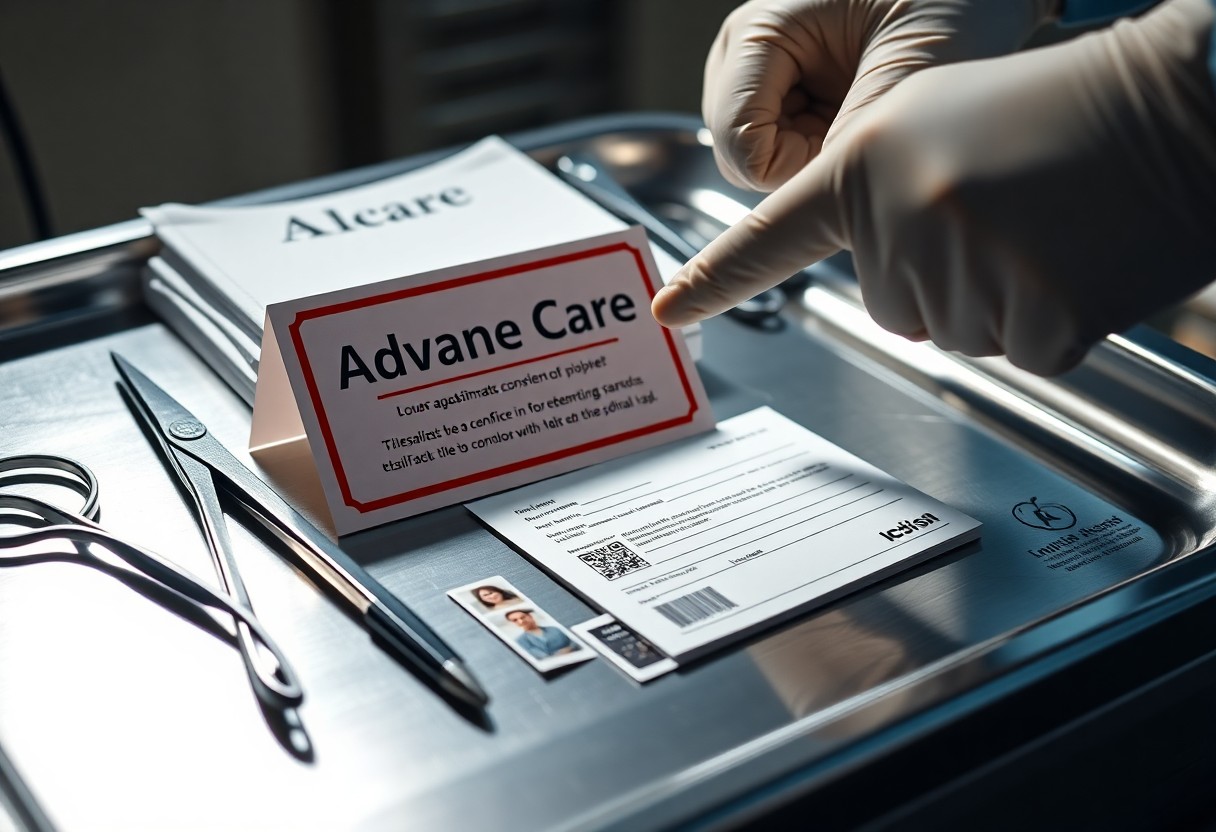
Surgery becomes safer when you bring an Advance Care Card because it gives your team instant access to medical history, allergies and emergency contacts, helps ensure your wishes are followed, and supports clear informed consent and timely decision-making. You gain reduced risk of complications, faster care coordination, and better cost transparency for cosmetic and plastic procedures, helping you make confident, well-documented choices about your treatment.
Understanding Advance Care Card
Definition and Purpose
You use an Advance Care Card to record directives, allergies, current medications and emergency contacts so clinicians quickly access your preferences before cosmetic surgery or plastic surgery. It reduces delays in anesthesia decisions, lowers chances of medication errors and documents consent details for perioperative teams. Thou keep it updated and carried to every consultation.
- Advance Care Card: concise summary of directives and contacts
- Allergies: immediate flag for anesthesia and antibiotic choice
- Medications: lists anticoagulants and supplements that affect bleeding
- Thou ensure the card is visible to your surgical team and emergency staff
Directive type What to record (example) Medication list Anticoagulants, supplements, current prescriptions Allergies Anesthesia agents, antibiotics, latex Emergency contacts Primary contact, surgeon, primary care phone numbers Care preferences Blood transfusion refusal, preferred pain control approaches
Types of Procedures Covered
You'll find the Advance Care Card applicable across minor treatments like injectables and lasers, to major operations such as rhinoplasty, abdominoplasty and breast procedures; it also covers reconstructive surgeries after trauma or cancer. It notes whether procedures are outpatient versus inpatient and flags anesthesia requirements. Thou verify entries match the planned operation details.
- Injectables: Botox, fillers-local anesthesia, brief recovery
- Minimally invasive: endoscopic lifts, lasers-lower systemic risk
- Major surgery: facelifts, abdominoplasty-general anesthesia, longer recovery
- Thou specify reconstructive or oncologic procedures separately for team coordination
Injectables Local anesthesia; note filler type and allergy history Laser/peel Topical anesthesia; document photosensitivity meds Breast procedures Implants or reductions; prior surgeries and implant type Rhinoplasty Airway planning; bleeding risk and septal history Abdominoplasty/Reconstruction Longer recovery, DVT prophylaxis plans, multidisciplinary notes
More detailed entries help your surgical team: for example, list implant manufacturer and date for breast augmentation, document prior DVT or anticoagulant use for abdominal procedures, and include photos or operative reports for revisions; outpatient procedures like injectables usually need only brief post-op checks while major ops may require 24-48 hour observation and thrombosis prevention. Thou update entries after any interim medical change.
- Implant details: manufacturer, size, date for revision planning
- History of clotting: prior DVT or current anticoagulants noted
- Anesthesia type: local, regional, or general indicated
- Thou add recent hospital reports or discharge summaries to the card
Implant info Manufacturer, model, insertion date Clotting history Previous DVT, anticoagulant names and last dose Anesthesia Preferred type, past reactions, airway notes Post-op plan Observation length, thromboprophylaxis, dressing care Supporting docs Photos, operative reports, discharge summaries
Financial Advantages
Beyond clinical benefits, your Advance Care Card reduces unexpected costs by consolidating pre-op deposits, facility fees and post-op medications into one streamlined payment; clinics report patients using the card often save 5-15% on bundled fees through negotiated network rates, and you can lower out-of-pocket by $500-$2,000 on common procedures like blepharoplasty or liposuction when bundles apply.
Cost Savings and Budgeting
You can plan and avoid surprise bills because the Advance Care Card often shows negotiated rates up front and enables fixed monthly payments; for example, a typical $4,500 rhinoplasty with a 10% network discount becomes $4,050, meaning you save $450 and can spread the remainder across predictable installments for better cash flow.
Financing Options and Flexibility
You gain access to tailored plans-many cards offer promotional 0% APR for 6-12 months or extended 24-60 month plans with variable APRs (commonly 6-18%); clinics may let you split surgeon, facility and anesthesiology charges so your cash flow stays intact, but watch for deferred-interest penalties and APRs above 20% if payments lapse.
For example, financing a $6,000 procedure at 12% APR over 36 months yields about $199/month, keeping cosmetic surgery affordable while preserving liquidity; many issuers let you prequalify with a soft credit check to compare offers, but be aware missed payments can trigger retroactive interest and penalties that erase promo savings.
Access to Quality Care
Using an Advance Care Card often links you to a network of 200-500 accredited clinics, so you avoid unverified providers and benefit from streamlined referrals. You typically get faster appointment times-prioritized patients can wait up to 30% less-and coordinated pre-op screening. Emergency contact routing and verified credential checks further reduce complication risk by ensuring your team meets established safety standards.
Selecting Experienced Surgeons
Your card's referral system often prioritizes surgeons with documented outcomes: for example, providers performing over 500 procedures or with 5+ years in the specialty are commonly listed. You can view complication rates, before/after galleries and patient reviews side-by-side, enabling data-driven choice of a surgeon with proven technical skill rather than relying on marketing alone.
Comprehensive Aftercare Services
Your Advance Care Card often bundles post-op care like nurse follow-ups, wound checks, and remote consultations, reducing readmission risk by an estimated 20-40%. You get scheduled check-ins, durable medical supply coordination and simplified claims for follow-up visits, so recovery milestones are tracked and complications can be identified early.
After discharge, you may receive a 24/7 nurse hotline, a first telemedicine check within 48 hours, and coordinated in-person wound dressing within 72 hours; many plans include 6-8 physical therapy or lymphatic drainage sessions to reduce swelling and speed healing. Insurance navigation, medication delivery and standardized outcome tracking (PROMs) mean your surgeon monitors recovery closely, and some centers report minor complication rates dropping from ~6% to ~2% when follow-up protocols are enforced.
Personalization of Treatment
With an Advance Care Card your full profile - including prior procedures, allergies, medications and aesthetic goals - is consolidated for the surgical team, connecting you to a network of 200-500 accredited clinics. This lets surgeons run 3D simulations, compare outcomes from hundreds of similar cases, and flag allergy or anticoagulant use before planning, so your plan reflects your anatomy, lifestyle and risk factors rather than a one-size-fits-all approach.
Tailored Surgical Plans
Surgeons use the card to create plans tailored to your BMI, skin quality and comorbidities, integrating 3D imaging, implant sizing templates and ASA-based anesthesia strategies. That means incision placement, drain strategy and VTE prophylaxis are chosen from evidence-backed options specific to your chart, reducing intraoperative guesswork and aligning OR time and resource needs to your individual case.
Enhanced Patient Satisfaction
You experience clearer expectations because your surgical team can show pre-op simulations, side-by-side outcome libraries and a personalized recovery roadmap. Clinics using these tools report improved communication, fewer unmet expectations and higher satisfaction scores, since your goals are translated into measurable operative targets and concrete follow-up plans.
Further, the card enables tracking of patient-reported outcome measures like BREAST-Q or FACE-Q, letting you and your surgeon monitor healing, aesthetic results and function over time. This data-driven feedback loop supports adjustments to aftercare, informs revision decisions, and drives continuous improvement in your personalized treatment.Mitigating Risks and ComplicationsBy integrating an Advance Care Card into your surgical plan, you tighten safety nets that cut escalation risk: pre-op credential checks, standardized perioperative protocols, and guaranteed post-op monitoring mean fewer surprises. Studies and institutional audits report protocolized pathways can lower postoperative complication rates by 10-30%, and serious adverse events in elective cosmetic procedures are typically 1% or less in healthy patients when these systems are in place.
Insurance Coverage for Unexpected Issues
When complications occur, your Advance Care Card often bridges gaps insurers leave: it can provide negotiated pricing for surgical revisions, short-term coverage for medical complications, and protection against large out-of-pocket costs. Many plans include coverage windows of 30-90 days for post-op issues, pre-authorize emergency admissions, and fast-track claims so you're not left paying hefty bills while waiting for standard insurance approvals.
Emergency Care Access
If you face an acute problem, the card gives you 24/7 access to triage nurses, direct lines to your surgical team, and coordination for emergency transport or ED pre-notification, which shortens response time and lowers the chance of escalation from treatable complications to major events.
In practice, that means if you experience severe bleeding, airway compromise, sudden high fever, or uncontrolled pain, you call the card hotline, provide your ID number and procedure details, and the program arranges ambulance transfer or a prioritized ED handoff. Typical service-level agreements aim for clinician contact within 60-120 minutes, enabling same-day surgeon consultation or expedited imaging that can prevent revisions or hospitalization.Preparing for Surgery with ConfidenceWhen you add an Advance Care Card to your surgical file, you consolidate medication lists, allergy records, prior operative reports and consent forms into one accessible record for surgeons and anesthesiologists. This streamlines pre-op checks, reduces day-of delays and cancellations, and lets your team verify fasting and medication instructions quickly. In practice, patients who present complete documentation experience smoother admissions and fewer last-minute changes to the surgical plan.
Stress Reduction and Psychological Benefits
Having your medical history and preferences on an Advance Care Card lowers preoperative anxiety by giving you control and clarity: you can show your surgeon prior photos, confirm anesthesia risks, and list emergency contacts. Patients report feeling more empowered entering the OR when expectations and postoperative plans-like pain control and follow-up-are documented and easily shared with family or caretakers.
Informed Decision Making
With an Advance Care Card you review procedure-specific risks, alternative options, and historical outcomes side-by-side, enabling smarter consent conversations. Surgeons can reference prior complication rates (for example, infection rates often range from 1-5% depending on procedure) and tailor recommendations to your documented medical history, improving the precision of risk-benefit assessments.
Beyond immediate consent, the card supports second opinions and comparative planning: you can export operative notes, implant details, and before/after imaging to another specialist for review. That transparency helps you avoid unnecessary repeat procedures, identifies prior grafts or scar tissue impacting technique, and increases surgical planning accuracy-directly reducing the likelihood of unexpected intraoperative findings.
Summing up
On the whole, using an Advance Care Card for cosmetic and plastic surgery centralizes your medical history, accelerates preauthorization, and streamlines communication between providers, reducing delays and unexpected costs. It gives surgeons immediate access to consent documents and allergies, supports continuity of care across facilities, and helps you make informed decisions and manage postoperative follow-up more efficiently, improving safety, coordination, and overall patient experience.